Your First Night in Korea: A No-Stress Evening Plan
Land in Korea and handle the essentials calmly: get online, grab a T-money card, get cash, eat, and reach your bed even if you arrive late.

You've been on a plane for ten-plus hours, it's dark outside, and every sign is in a script you can't read yet. Breathe. Your first night in Korea only has four real jobs: get online, get a transit card, get some cash, and get to bed. Everything else can wait until morning. Here's the calm, in-order version — including what to do if you land after the last train.
Before you start
Do two things while you're still on the plane or in the immigration line. First, screenshot your accommodation's address in Korean (Korean drivers and maps love the Korean address, not the romanized one). Second, decide how you're getting online: an eSIM you activate the second you land, or a physical SIM you buy at an airport counter. If your phone supports eSIM, setting it up before you fly is the least stressful option — you walk out already connected.
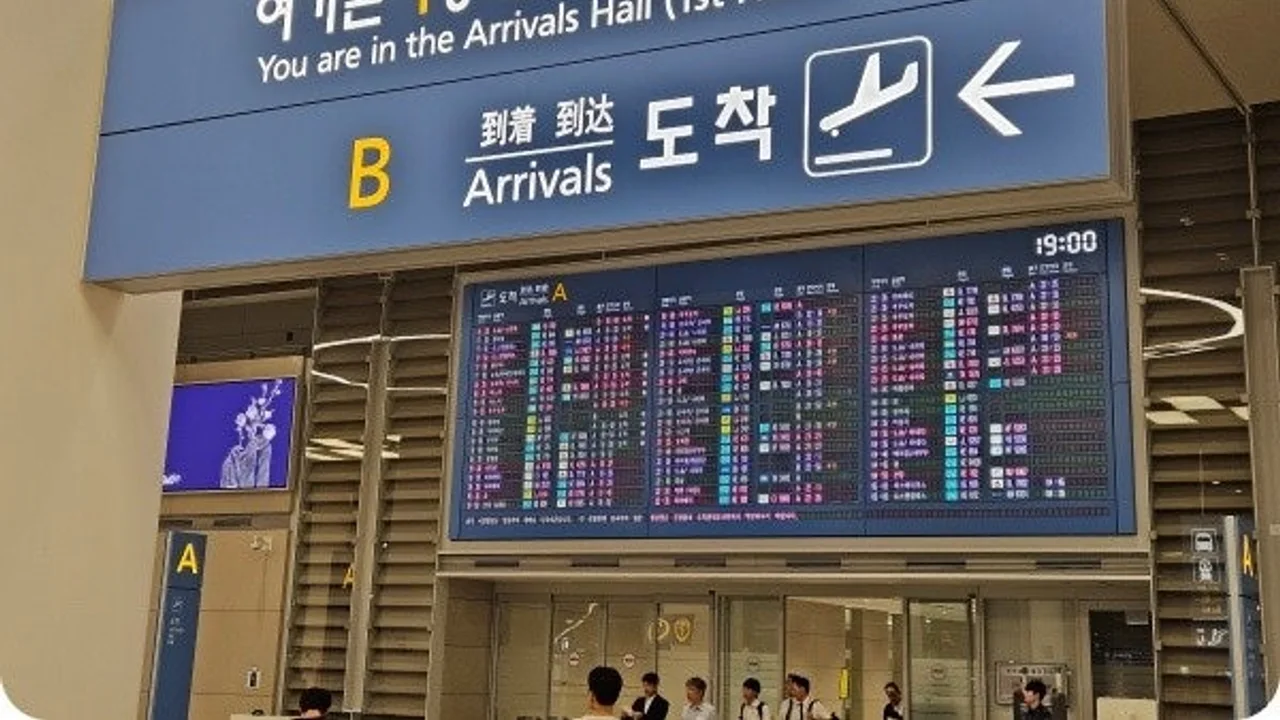
Also know your arrival time honestly. The Express AREX train to Seoul Station makes its last run around 22:40, and the all-stop train a little later (roughly 23:30). If your flight lands after that, you're on the night-bus-or-taxi plan, which is totally fine — just good to know before you're standing in the arrivals hall.
What you need
- Your passport — required to buy a SIM (no ARC or Korean address needed).
- A payment card that works abroad — Visa/Mastercard are widely accepted, plus a card that can pull cash from a Global ATM.
- A little cash, or a plan to get it — some counters and top-ups prefer won.
- A maps app that works in Korea — Naver Map or KakaoMap. Google Maps directions are limited here. See our essential apps guide.
- Your accommodation address saved in Korean.
Step-by-step
1. Get connected. Use your purchased plan’s activation instructions, or confirm an open provider counter and its current quote. Not every counter or product is available overnight. Save the hotel address offline before you travel.
2. Check cash needs. Use an ATM that supports your card network. Read the machine’s fee and conversion choice before accepting; issuer charges may be separate. Carry enough for your planned cash-only purchases without assuming one fee applies everywhere. See cash versus card.
3. Check your transport card. If your onward route needs one, buy an eligible card and load the amount appropriate for your journey. The card purchase and travel balance are separate costs. See the T-money guide.
4. Get to your accommodation. Check the last train or current night-bus departure for your terminal and destination. If choosing a taxi, use the official queue or a confirmed booking and ask about the total fare, tolls and surcharges. See the airport transport comparison.
5. Eat something. Near your accommodation, duck into a 24-hour convenience store. A hot bowl of ramyeon, a gimbap roll, and water will run you well under ₩10,000 and you can microwave it right there.
Make a simple arrival budget
Add your current connection-plan quote, any ATM fees, transport-card purchase and balance, and the onward ticket or taxi estimate. Keep a reserve for a delayed arrival or a different transport option. This is a planning checklist, not a fixed-price package or a journey we timed ourselves.
Common problems (and fixes)
- "My card was declined at the SIM counter." Try another card, or pay cash — that's exactly why you pulled won first.
- "The ATM rejected my card." Not every ATM takes foreign cards. Look specifically for the Global ATM label; convenience-store machines are a reliable fallback.
- "I missed the last train." Ask airport staff about the next available night service and official taxi arrangements. Confirm that the route reaches your destination.
- "Everything's closed." Some convenience stores now shut roughly 1am–6am. If one's dark, the next block usually has another; 24-hour branches cluster near stations and hotels.
- "I can't read the taxi app." KakaoTaxi has an English mode; or show the driver your saved Korean address on screen.
Good to know
Tap water is safe to drink, but most people drink bottled or filtered — grab a bottle for your room. Don't tip the taxi driver or anyone else; it's simply not expected here and can cause confusion. And genuinely, resist the urge to fix your whole trip tonight. Sleep off the jet lag, and handle banking, longer SIM plans, and sightseeing tomorrow — see the first-day mistakes to sidestep so morning-you starts smoother.
Prepare for a late arrival
Before departure, save the hotel address in Korean, its check-in instructions and a contact method. Confirm the terminal and the final onward departure for your arrival time. Incheon Airport's arrival guide is the procedure reference; tickets and operating hours belong to the transport provider. If language is the obstacle, prepare one short translated question at a time and ask airport or hotel staff to confirm the answer. This is a suggested arrival checklist, not a timed first-person trip report.
Frequently asked questions
›What should I do first when I land at Incheon at night?
Use your plan’s activation instructions or check an open provider counter. Keep the hotel address offline, check cash or transport-card needs, and confirm an available onward service for your terminal.
›How much cash should I have for my first night?
Budget for your planned cash-only purchases and top-ups, plus a reserve. Check current prices and ATM fees rather than assuming one amount suits every arrival.
›What if I arrive after the last train from the airport?
Check current night-bus departures and official taxi arrangements for your terminal. Confirm the destination, fare, tolls and applicable surcharges before boarding.
›Where can I eat late on my first night?
Check for an open convenience store or restaurant near your accommodation. Individual branch hours vary, so do not assume every convenience store operates overnight.
Sources and updates
Last edited on October 12, 2026. Sources support the specific details discussed in the guide; check the provider for current prices, availability and eligibility.