How to Find and Use Public Toilets in Korea
Find and use public toilets in Korea with confidence: map-app searches, subway restroom tips, toilet paper rules, bidet labels and handy Korean phrases.
Few things make a long day of sightseeing easier than knowing where the next restroom is. For first-time visitors, the good news is that Korean cities generally have plenty of toilets in subway stations, parks, public buildings and large shopping complexes. What helps is knowing how to find one quickly and which small habits matter once you are inside. This guide covers a simple workflow, the signs to look for, and the etiquette questions most travelers ask.
A quick way to find a toilet
Start with a nearby search. Open Naver Map or Kakao Map and search for 화장실 (hwajangsil, "restroom"). Look for public restroom listings and options inside nearby stations, parks and buildings. Before you walk over, check three things:
- Entrance and floor. A pin may sit on a large building, and the restroom could be on a basement level or behind a specific entrance.
- Access. Some restrooms are open to the public. Others belong to a cafe, office or store and are meant for customers or tenants.
- Hours. Many station and building restrooms follow the station's or building's operating hours, so your options can narrow late at night.
Map listings are a starting point, not a guarantee. A restroom can close for cleaning or repairs, and listing details can lag behind changes on the ground.
| Where to look | What to check | Best for |
|---|---|---|
| Subway stations | Inside or outside the fare gates; station hours | Quick stops while riding transit |
| Parks and riverside areas | Posted hours; which building or kiosk | Walks, picnics, riverside outings |
| Department stores and malls | Floor directory; store opening hours | Shopping days, family facilities |
| Museums and cultural venues | Whether a ticket or entry is needed | Sightseeing stops |
If you're in Seoul
Seoul offers its own optional tools on top of the general map apps. The city's official restroom location guide points people to Smart Seoul Map (스마트서울맵), where the City Life Map (도시생활지도) includes a public toilets (공중화장실) layer. The same guide also suggests searching 화장실 in Naver Map or Daum Map. These resources are specific to Seoul. Elsewhere, start with a map-app search or ask nearby staff. Language options and data freshness can vary, so confirm any listing when you arrive.
Subway station restrooms
Station toilets are among the most useful options for visitors. Seoul Metro publishes restroom information for the stations it manages on Lines 1–8. The Seoul Open Data Plaza listing describes details such as whether a restroom is inside or outside the fare gates, which floor it is on, opening times and accessibility-related facilities.
The inside-or-outside question matters. If a restroom is inside the paid area and you are outside it, ask station staff how to reach it before tapping in; do not assume access will be free. If you are already riding and the restroom is outside the gates, ask station staff before you tap out rather than assuming you can re-enter. Do not assume a station or its restrooms are accessible around the clock; check the relevant operating hours and have a backup plan for late nights.
Useful signs
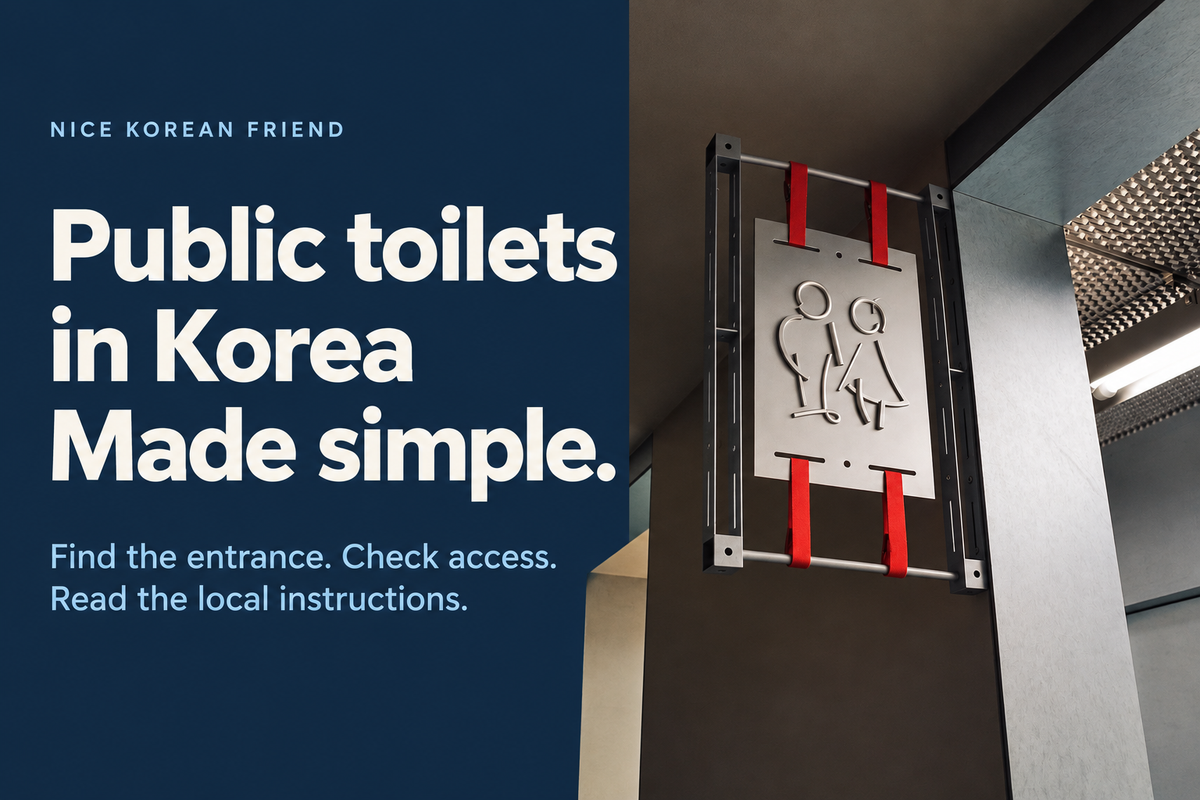
Look for restroom pictograms and any English labels. These Korean words are still handy to recognize:
| Korean | English |
|---|---|
| 화장실 | Restroom / toilet |
| 남자 / 남 | Men |
| 여자 / 여 | Women |
| 장애인 화장실 | Accessible restroom |
| 수유실 | Nursing room |
| 개방화장실 | Restroom open to the public |
What to do with toilet paper
You may have read that all toilet paper in Korea goes into a bin. That advice is out of date for public restrooms. The Ministry of the Interior and Safety's restroom explainer notes that public stalls are generally set up without waste bins, although sanitary disposal bins may be provided and exceptions exist.
In practice:
- Used ordinary toilet paper normally goes in the toilet bowl in public restrooms.
- Do not flush wet wipes, sanitary products or paper towels. Put them in the appropriate bin.
- If a notice gives specific instructions, for example about the plumbing, follow it. Don't decide based only on whether a bin happens to be there.
One easy habit: check for paper before you lock the stall door, and carry a small pack of tissues as a backup. Not every pocket tissue is designed to be flushed, so check the packaging.
Fixtures and bidets
You may encounter seat toilets, squat toilets or a bidet seat with a control panel. Using the bidet is entirely optional. Panels differ by model, so read the labels instead of pressing buttons at random. Most importantly, 비상벨 is an emergency call button, not a flush.
| Label | Meaning |
|---|---|
| 물내림 | Flush |
| 정지 | Stop (bidet) |
| 비상벨 | Emergency call |
Some toilets flush automatically, some use a lever and some use a wall button. If you're unsure, look for 물내림 or a flush icon.
Accessibility and families
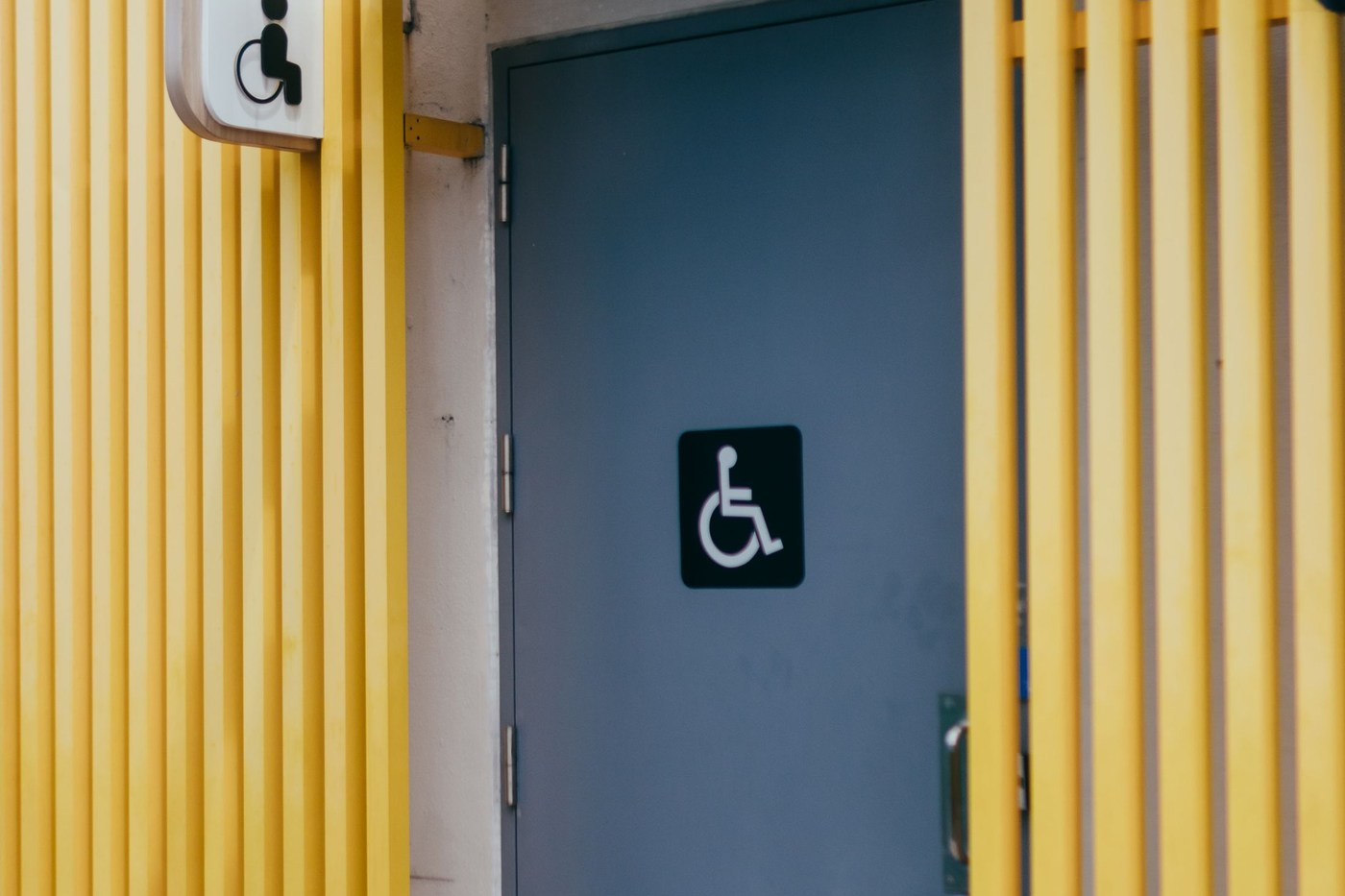
An accessible-restroom symbol is useful, but it doesn't confirm a step-free route, a working lift today, enough space or a changing table. If those details matter, confirm the route, floor and features with staff. Keep accessible restrooms free for the people who need them, and avoid using them as a place to sort luggage. Large malls, department stores and stations are places to check for nursing rooms and family facilities, though availability varies.
Some cafes and office buildings keep restrooms for customers or tenants, sometimes behind a door code. Don't assume every cafe or office restroom is open to walk-ins. Check posted signs, and when in doubt, ask staff.
Phrases that help
화장실 어디예요? (Hwajangsil eodiyeyo?)
Where is the restroom?
화장실 써도 될까요? (Hwajangsil sseodo doelkkayo?)
May I use the restroom?
개찰구 안에 있어요? (Gaechalgu ane isseoyo?)
Is it inside the fare gates?
엘리베이터 있어요? (Ellibeiteo isseoyo?)
Is there an elevator?
A small day-bag checklist
- Pocket tissues (check whether they are flushable)
- A small hand towel or hand sanitizer
- A charged phone with Naver Map or Kakao Map
- A saved backup restroom location for a long outing
Wash your hands with soap and water whenever you can. Finding a restroom is one of those travel errands that gets easier after the first day, and our laundromat guide covers another. With a quick map search and a few Korean words, you'll be back to exploring in no time.
Frequently asked questions
›Are public toilets in Korea free to use?
Many public restrooms in stations, parks and public buildings can be used without a fee, but not every restroom is public. Some cafes, offices and stores keep restrooms for customers or tenants, so check posted signs or ask staff.
›Should I put toilet paper in the bin or flush it?
In public restrooms, used ordinary toilet paper normally goes in the toilet bowl. Wet wipes, sanitary products and paper towels should go in the bin. If a notice gives different instructions, follow the notice.
›Can I use a subway station restroom without paying a fare?
It depends on the restroom’s location and access rules. Confirm whether it is inside or outside the fare gates, and ask station staff before tapping in or out. Do not assume access or re-entry will be free.
›What does the 비상벨 button in a Korean toilet do?
비상벨 means emergency call. It is not a flush button, so look for 물내림 (flush) or a flush icon instead, and read the panel labels before pressing anything.