How to Order at a Korean Café: A First-Timer’s Guide
A calm first-timer's guide to ordering at a Korean café: where to sit, kiosks and counters, for here or to go, pickup pagers, and returning your tray.
Ordering coffee in Korea is usually easy, but the first time can feel like a small puzzle. Do you sit down or line up? Is that screen by the door a kiosk? This guide follows one visit from the door to the return shelf, so you know what to look for at each step. Every café sets up its own system, so think of this as a map rather than a rulebook. Whenever a branch's signs or staff say something different, follow them.
Step 1: At the entrance, check the seat-and-order sequence
Before you walk anywhere, pause just inside the door and look around. The sequence varies. At some cafés you order at the counter or kiosk first and then find a table. At others it's fine to settle in before ordering, and at a few, such as some dessert spots or places with table service, staff may seat you or bring a menu over.
Watch for clues. A line in front of the counter or kiosk suggests ordering comes first. A sign near the entrance may explain the process. If a staff member greets you and points somewhere, follow that. If nothing is clear, just ask; the phrase table below can help.
If seating first is allowed and you're with a friend, one of you can stay at the table while the other orders. Either way, keep your phone, wallet, and passport on you rather than using them to mark a seat.
This is also the moment to read any posted notices. Some cafés display requests such as one drink per person, seating time limits at busy hours, or guidance on laptop use. If a sign asks for one drink per person, plan your order around it. If you'd rather get a dessert instead of a drink, ask whether that counts, because cafés decide this differently. If nothing is posted, don't assume a rule exists.
Step 2: Choose your drink, size, and for here or to go
Menus may be on a board above the counter, a printed card, or the kiosk screen. Many cafés list hot and iced versions; EDIYA's official drink menu, for example, includes HOT/ICED and DECAF categories. Still, don't assume every drink comes both ways, or that every café offers decaf, several sizes, syrups, or milk alternatives. Size names differ between chains, so go by what's listed.
If caffeine content matters to you, ask staff for the information for that particular drink.
Next, decide whether you're staying or leaving, and say so before your drink is made. The answer can change how it's prepared and what cup it goes in. Some cafés use mugs or glasses for customers who stay and takeaway cups for those who leave; some offer reusable cups or accept your own tumbler. Starbucks Korea's reusable cup campaign page, for instance, describes bringing your own mug or personal reusable cup. Practices differ between brands and branches, so if you've brought a tumbler, hand it over as you order and check that they can use it.
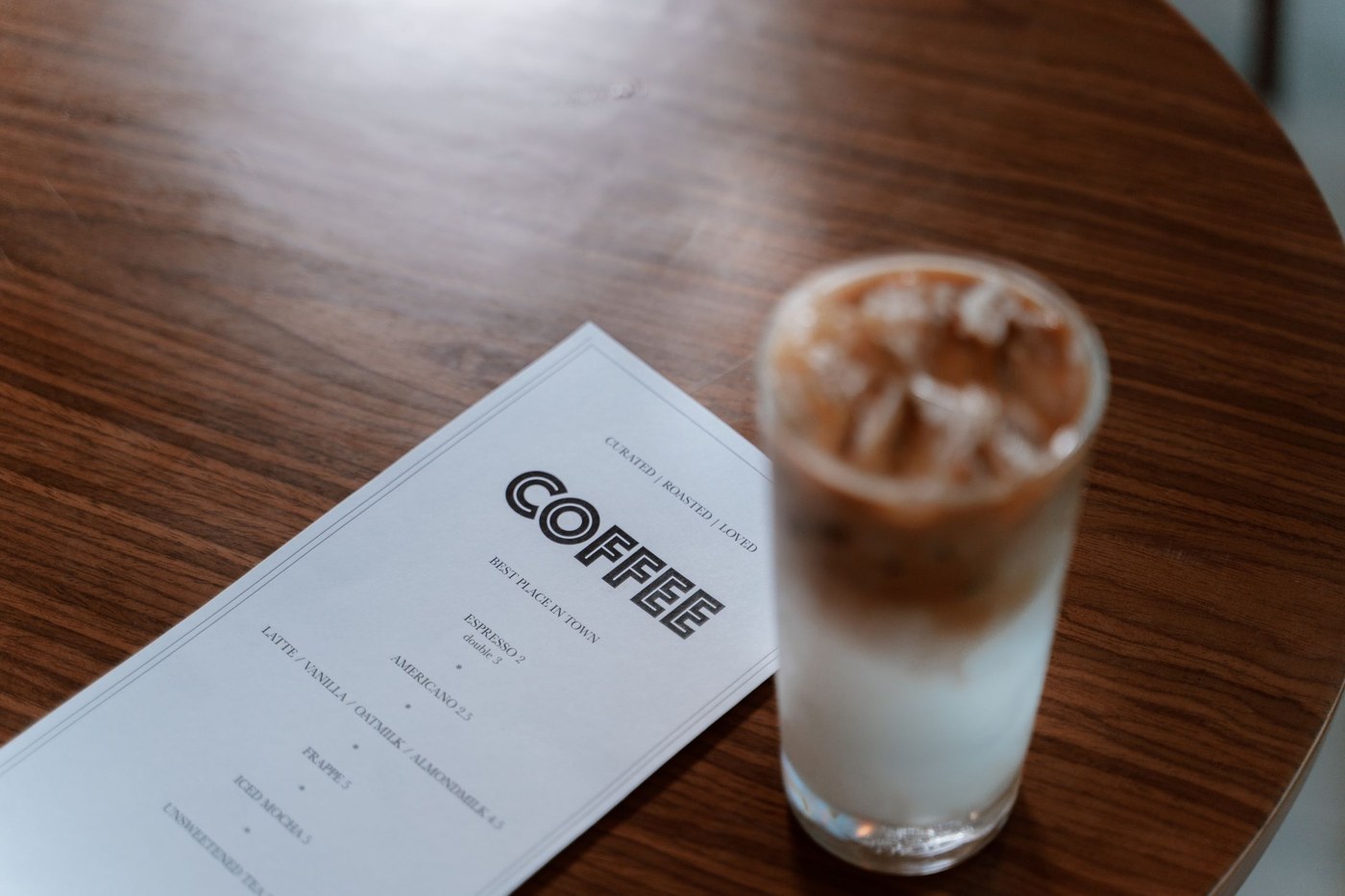
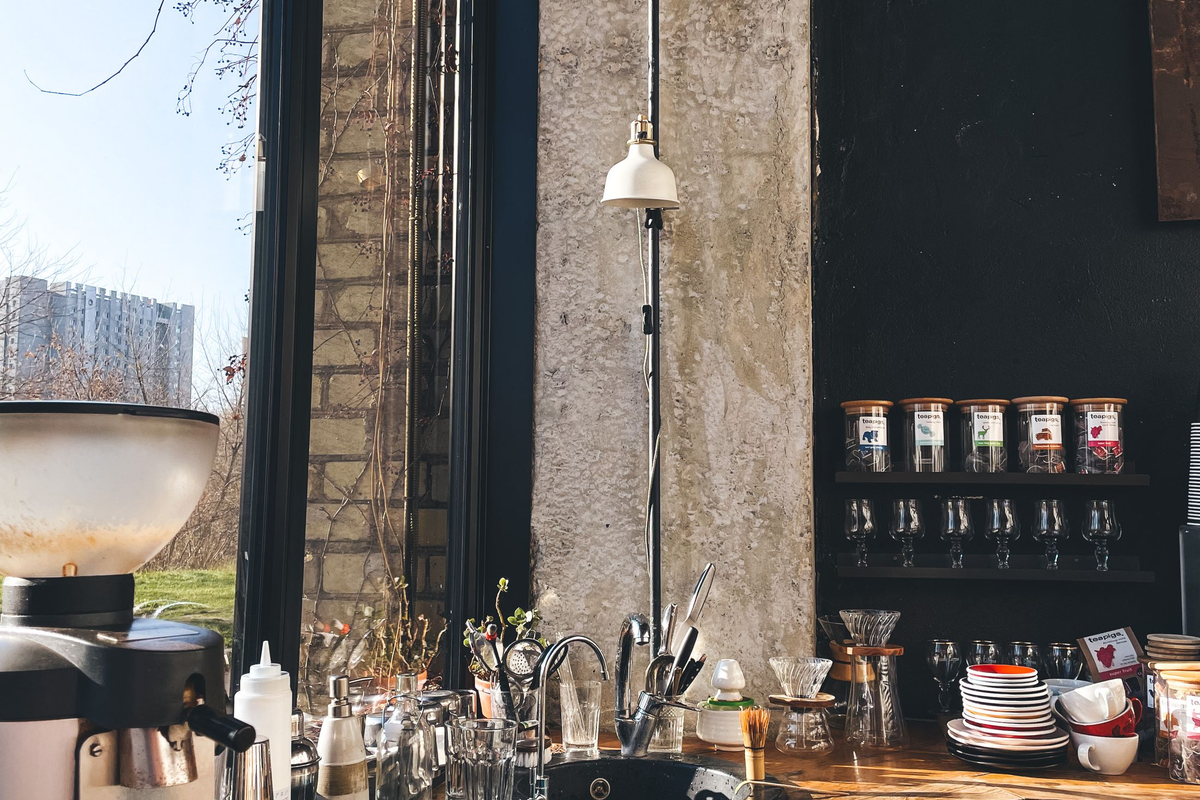
Illustrative café photo; menu choices and prices vary by shop.
Step 3: Order and pay at the counter or kiosk
At a counter, keep it short: the drink, hot or iced, size if asked, and for here or to go. A complete order can be as simple as one iced Americano for here: Aiseu amerikano han jan, meokgo galgeyo (아이스 아메리카노 한 잔, 먹고 갈게요). Staff might follow up about size, a membership or point card, or a receipt.
At a kiosk, look for a language button, sometimes a globe icon or ENG. Some kiosks have one and some don't. The flow often runs: dine-in or takeaway, drink, options, cart, payment. If the screen stalls or you can't read an option, step aside and ask a staff member.
On payment, don't assume everything will work for a visitor. A foreign card may go through at one terminal and be declined at another, and a counter can sometimes process what a kiosk won't. QR-code ordering and café apps may require a local phone number or account, so ask what ordering alternative the shop offers. If a payment fails, don't keep tapping or reinserting your card. Ask staff before trying again so you don't risk a duplicate charge. If you want to pay in cash, ask first. Keep your receipt, since it may show your order number.
Step 4: Watch for your pickup signal
Once you've paid, find out how you'll know your drink is ready. Cafés use different signals:
- A pager: a small device that buzzes and flashes. Keep it with you and go to the indicated pickup counter when it goes off. Return it when staff request it, often at pickup.
- A number: shown on a screen or called out. Check your receipt.
- Your name or nickname: sometimes used for app orders.
- Table service: staff bring the order to you.
The pickup spot may be separate from where you ordered, so look for a sign. Before walking off, check that the cup is yours, and pick up straws, lids, or napkins from the self-service area if there is one.
Step 5: Seat rules and returning your tray
Once you sit down, don't count on any particular amenity. Wi-Fi, power outlets, and restroom access vary. A Wi-Fi password might be posted or printed on the receipt, or there may be no Wi-Fi at all. Outlets may be few, and a restroom might be in the shared building or need a code or key. Laptop work is welcome in some places and limited in others, so go by the posted notices. When you step away, take your valuables with you.
When you're finished, look for a return station, sometimes labeled 반납대 (bannapdae). If you were given a pager, return it to the counter or wherever a sign indicates. Some stations have separate spots for leftover liquid, ice, cups, straws, and paper, so read the labels or pictograms before sorting anything. If there's no clear place for liquid, don't pour it into the nearest bin. Leave the cup on the tray at the return shelf or ask staff. At table-service cafés, staff may clear for you; if you can't tell, ask.
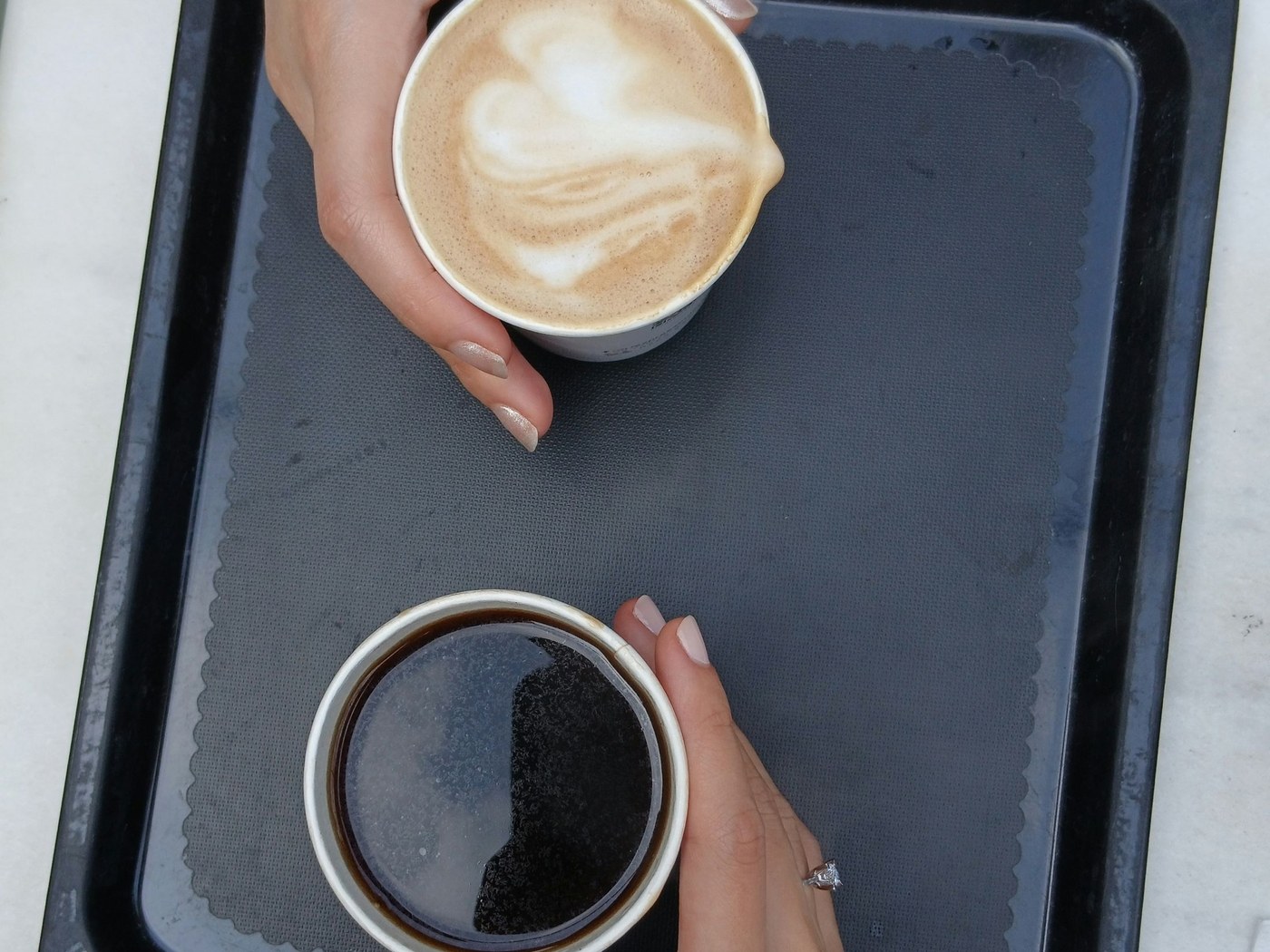
Illustrative tray photo. Follow the return instructions at the café you visit.
Useful phrases
| Korean | Romanization | English |
|---|---|---|
| 아이스 아메리카노 한 잔 주세요 | aiseu amerikano han jan juseyo | One iced Americano, please. |
| 먹고 갈게요 | meokgo galgeyo | For here, please. |
| 포장해 주세요 | pojanghae juseyo | To go, please. |
| 영어 메뉴 있어요? | yeongeo menyu isseoyo? | Do you have an English menu? |
| 카드 결제 돼요? | kadeu gyeolje dwaeyo? | Can I pay by card? |
| 결제가 안 됐어요 | gyeoljega an dwaesseoyo | The payment didn't go through. |
| 괜찮아요 | gwaenchanayo | No thanks, I'm okay. |
| 쟁반은 어디에 반납해요? | jaengbaneun eodie bannaphaeyo? | Where do I return the tray? |
If you'd like a relaxed neighborhood to try all this, see our notes on a slow afternoon in Seoul Forest and Seongsu cafés.
Frequently asked questions
›Can I sit and wait for a friend before ordering?
Ask staff before taking a table to wait for a friend, especially when the café is busy or a sign says to order first. The shop may have a waiting area or a minimum order.
›Can I bring outside food or drinks into a Korean café?
Policies differ by café. Check for a posted notice, and if there isn't one, ask staff before bringing anything in.
›Can my friends and I pay separately?
Ask before ordering: 따로 계산할게요 (ttaro gyesanhalgeyo) means we’ll pay separately. Staff can tell you whether to place separate orders; kiosk options vary.
›What should I do if my drink comes out wrong?
Take the drink and your receipt back to the pickup counter and calmly show the staff what you ordered. Having the receipt makes it easy for them to check and sort it out.